
LIDS CUAS
Led UX modernization of the maintenance and configuration experience for LIDS, a mission-critical counter-UAS system of systems (SoS) integrating radar, EO/IR, and electronic warfare technologies to defend against low-altitude aerial threats.
The system's maintenance tooling was originally engineered for highly specialized maintainers standing in the way of a DoD goal to eventually extend these tasks to operators as well. I led the redesign of this experience and the maintenance framework behind it — work that went on to become the design standard adopted across other products on the program — all without disrupting a live, deployed system.
User Research
Observational Studies
Journey Maps
Information Architecture
Interaction Frameworks
UI Design
Usability Testing
User Research Observational Studies Journey Maps Information Architecture Interaction Frameworks UI Design Usability Testing
Program Context
This modernization effort was part of a broader program that went on to secure a $426M U.S. Army contract and support a $1B Foreign Military Sales opportunity.
Design Impact
Reduced fault-diagnosis time from 52 to 36 minutes — a 31% improvement in time-to-resolution
Consolidated 3 separate tools and integrated manuals into a single unified interface.
Reduced new-maintainer onboarding and training time by 20%
Replaced fragmented, memory-dependent workflows with one guided flow
The Challenge
LIDS is a technically mature, deployed system of systems integrating multiple sensing and defeat technologies to protect against low-altitude aerial threats. But the tooling used to configure and sustain the system was originally engineered for highly specialized maintainers, built around system architecture, not around the people who needed to use it.
As operational demands evolved, government stakeholders pushed for reduced sustainment costs and less dependence on that specialized maintainer pool - with a goal of eventually enabling a broader range of personnel, including operators, to perform maintenance and configuration tasks. The existing tools increased cognitive load, buried critical information, and required deep system knowledge just to complete routine work, the opposite of what that goal required.
All of this sat inside a hard constraint: modernization couldn't disrupt a live, mission-critical system already deployed in the field.
The tool wasn't just hard to use, it was standing in the way of the DoD's own goal of a more flexible, less specialized workforce.
Modernize the maintenance and configuration experience for a mission-critical counter-UAS system of systems — without disrupting active operations.
Project Highlights
Defined the modernization strategy, aligning executive priorities, government stakeholder feedback, and mission requirements into a single roadmap.
Led field-based human-centered design research, translating operator and maintainer insights into actionable requirements for engineering and program leadership.
Owned design execution end-to-end — from early concepts through prototyping, testing, and iterative refinement — within a live, mission-critical system.
Partnered with engineering to deliver and scale design solutions without disrupting active operations, supporting rollout and continuous improvement in the field.
Project Details
Role
UX Designer (2021–2024)
Senior UX Designer (2024–2026)
2021–2024 — Research & Design
2024–2026 — Design Leadership & Sustainment
The Work
Modernizing maintenance and system readiness workflows.
Research & Analysis
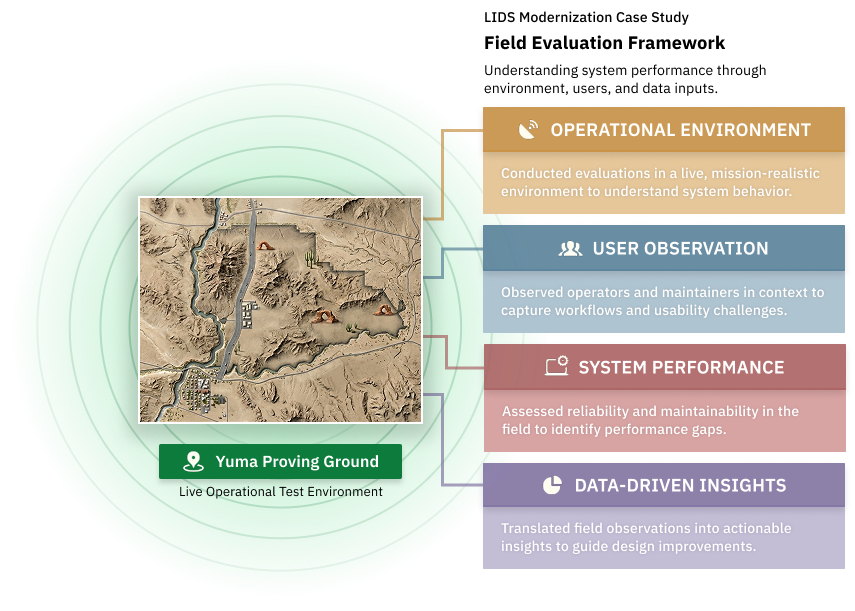
Before traveling for field research, I reviewed the system's technical manuals, training materials, and support portal with the engineering team to understand how the system was documented versus how it was actually used. I then spent 14 days embedded at Yuma Proving Ground, working across the full system lifecycle to gather insights on transportation, setup, configuration, use, and maintenance — with six maintainers spanning a range of experience levels. Research methods included contextual inquiry, individual interviews, and direct participation in maintenance tasks, alongside close collaboration with engineers to understand system performance data.
This work took place while the system was preparing for a test of record — the Army's formal evaluation determining whether a system is reliable enough for official fielding. It sharpened the stakes: any friction in the maintenance experience had a direct line to whether the platform would be approved for the soldiers who'd depend on it.
Field Insights & Findings
Built for engineers, not maintainers
Across 14 days of field research, the same pattern kept surfacing: the platform was technically capable, but the tools built to maintain it hadn't kept pace with how — or by whom — that maintenance actually needed to happen.
Key Operational Findings
Built for engineers, not maintainers
The tool was designed around system architecture rather than how maintenance tasks actually unfold, making navigation difficult even for experienced users, and effectively locking out less experienced maintainers entirely.
Fragmented, memory-dependent workflows
System status and fault information were scattered across disconnected tools with limited feedback, forcing maintainers to rely on memory and informal workarounds instead of a guided process.
Documentation disconnected from the work itself
Technical manuals existed separately from the system — complex, hard to navigate, and never integrated into the actual maintenance workflow.
User feedback
“ Right Now, we’re using multiple tools and relying on experienced maintainers just to complete routine tasks. We need one system that guides us through clearly and efficiently. “
- Maintainer
CROSS-FUNCTIONAL CONTRIBUTIONS
Integrating HCD Across the System
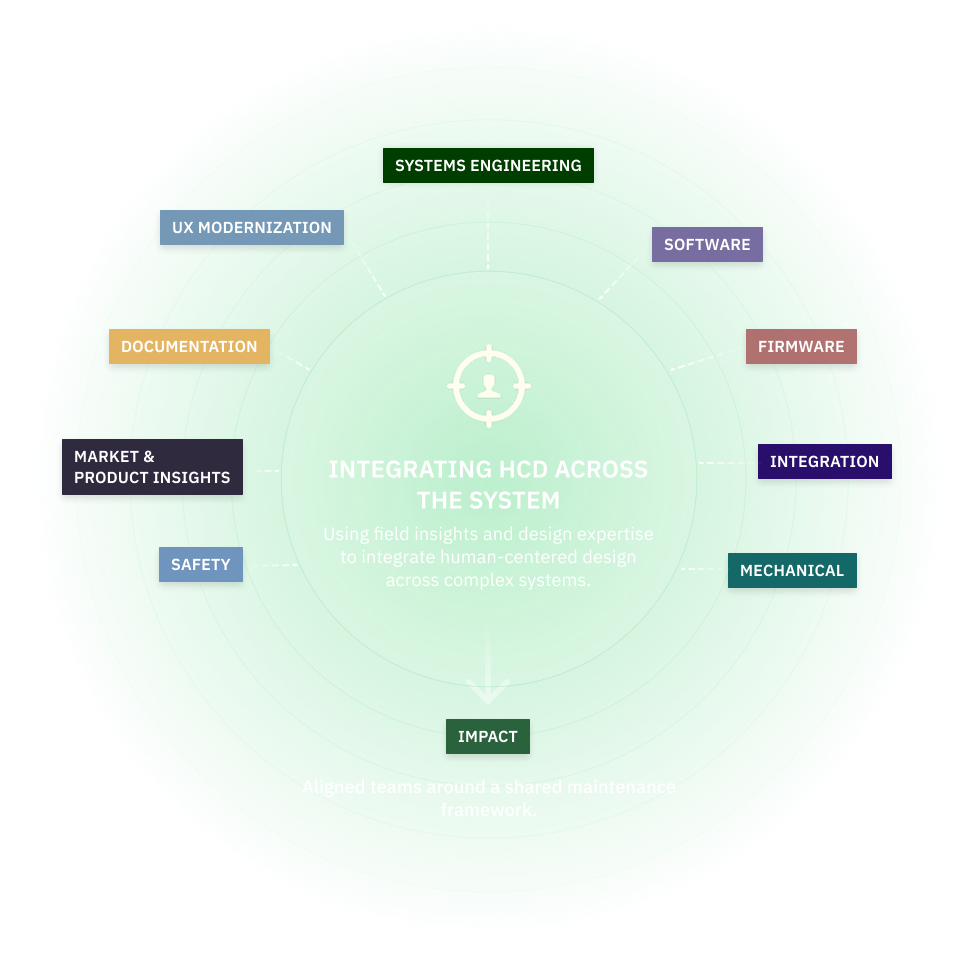
The field findings revealed systemic gaps across workflows, tools, and team boundaries. I worked across engineering, product, and operational teams to integrate Human-Centered Design into the system, bridging gaps between user needs and system implementation.
Translating Findings into System-Level Change
Partnered with Systems Engineering to translate field findings into system-level requirements, embedding usability into early design decisions rather than retrofitting it later.
Worked with Software and Firmware teams to align interaction patterns, alerts, and system feedback with what maintainers actually needed to diagnose issues quickly.
Collaborated with Mechanical and Safety teams to ensure interface and workflow decisions held up against real physical and field constraints.
Partnered with Integrated Logistics Support (ILS) and Documentation teams to restructure technical training content around real maintenance tasks, reducing reliance on informal, tribal knowledge.
Worked with Market & Product Insights to keep design decisions aligned with the DoD's broader goal of reducing dependence on specialized maintainers.
Driving System & Organizational Change Through HCD
System Health & Maintenance Framework
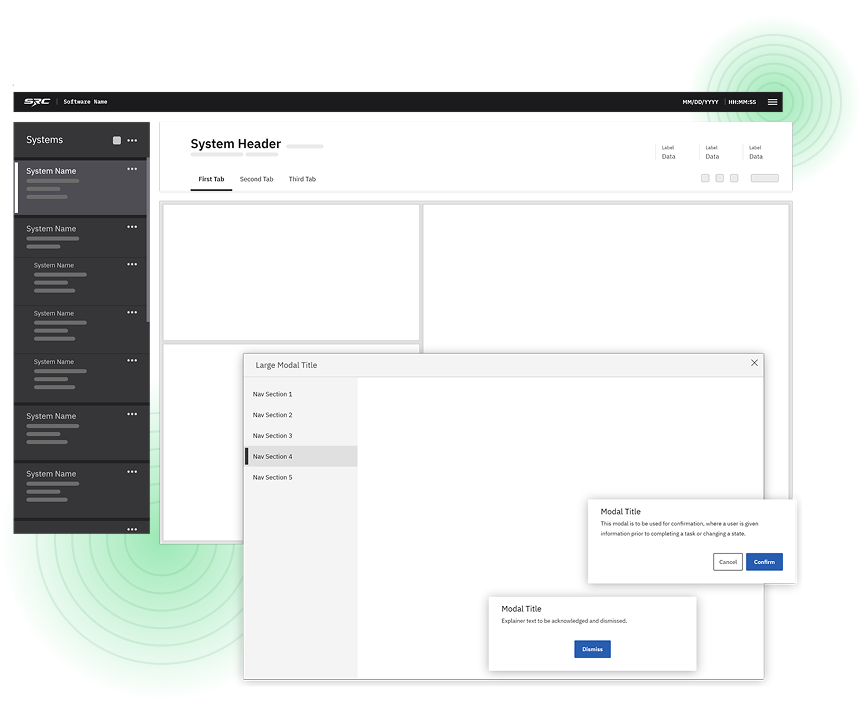
Maintainers were navigating fragmented, engineering-centric tools with no unified way to understand system status across connected subsystems — forcing them to cross-reference multiple disconnected tools just to identify what was wrong.
I designed the System Health & Maintenance Framework to solve this directly: a navigation model that surfaces faulted systems first, replacing scattered status checks with a single guided path from detection to resolution. The framework consolidated three separate tools into one unified interface and became the direct driver behind a meaningful reduction in fault-diagnosis time — validated through field testing before rollout.
This became the design foundation for maintenance experiences across the broader program, later scaling into the shared design system now used across 12 products.
Screens shown are recreated to illustrate the design direction and interaction model, not captures of the production system.
Physical System Modernization & Human Factors Integration
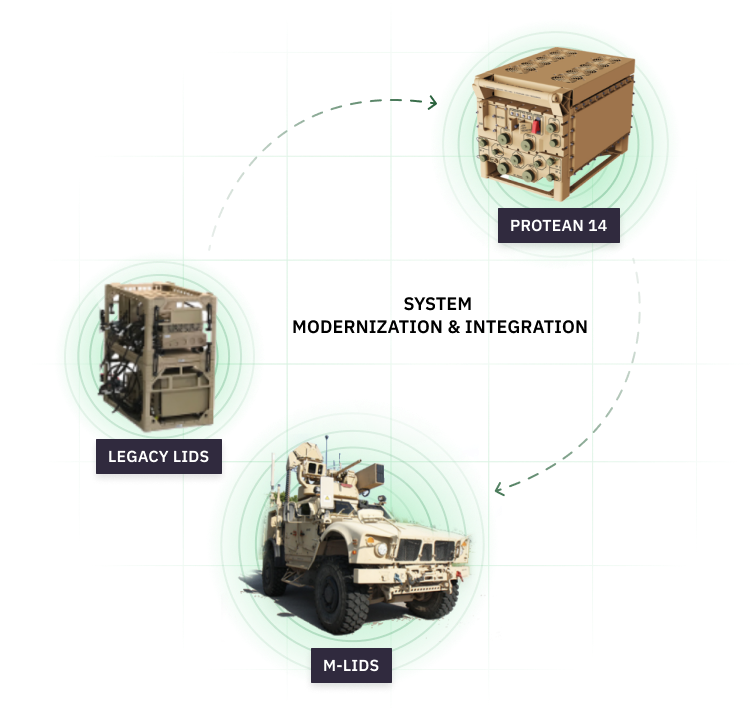
Partnered with our industrial designer during physical hardware modernization, validating usability and human factors across real operational scenarios — including on-the-move conditions — to ensure physical decisions matched how maintainers actually worked.
Design System Integration & Enablement
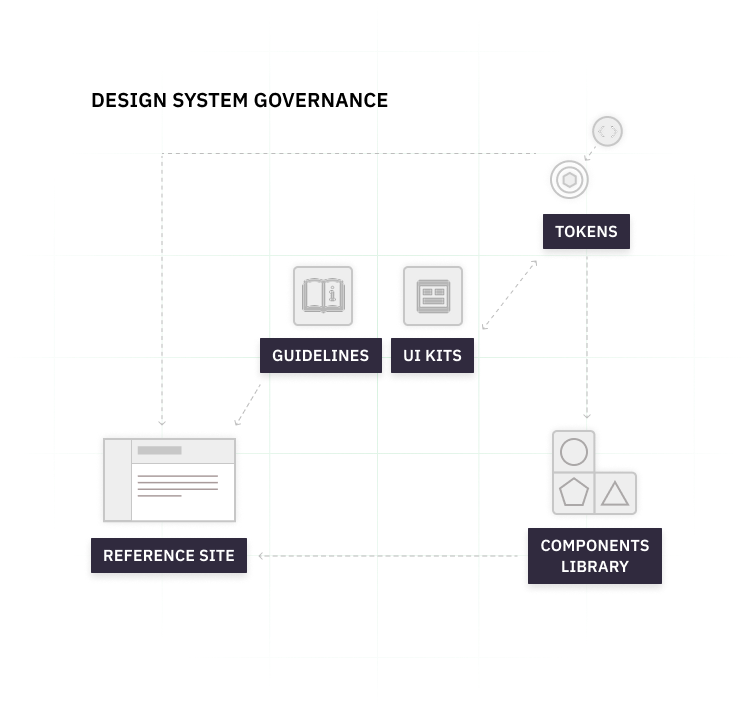
The System Health & Maintenance Framework's success surfaced a broader gap: other teams across the program were solving similar interaction problems in inconsistent ways, with no shared design standard to build from.
Working alongside a team of 8 designers, I took ownership of the design system's core infrastructure — building the internal design system site, developing UI kits, maintaining developer support and documentation, and driving adoption across design and engineering teams. It's now the shared standard across 12 products on the program, reducing rework and keeping the experience consistent as the platform scales.
Outcomes
Usability: Formal usability testing showed an approximate 25% increase in System Usability Scale (SUS) scores following the redesign — the difference between a low-usability and high-usability rating.
Speed to resolution: Fault-diagnosis time dropped from 52 to 36 minutes (31% faster) through a redesigned, priority-based navigation model that surfaces faulted systems first.
Tool consolidation: Operators and maintainers now work from a single unified interface instead of switching between 3 disconnected tools.
Faster ramp-up: New-maintainer onboarding time decreased by 20%, reducing reliance on senior specialists for routine diagnostic tasks.
Scale: The design system is now the shared standard across 12 products on the program, reducing rework and inconsistency.
Reflection
What began as a usability problem revealed something bigger: a legacy system built around engineering logic, not the people sustaining it in the field. Solving it meant more than redesigning screens — it meant building a framework other teams could stand on, working honestly within an 8-designer, multi-discipline program where no single person owns the whole picture.
That framework outlived its original scope. What started as a fix for one maintenance workflow became the design standard across 12 products — a reminder that the most durable design work isn't the interface itself, but the system of thinking behind it.