
Oracle
OATS
Oracle Anti-Trafficking Service
Designed a centralized data entry and management application that streamlines how users collect, organize, and analyze large volumes of information while ensuring data integrity and security.
*This is an update on the Snowglobe project.
After the MadHacks competition, we moved beyond the prototype and engaged directly with potential users to evaluate the application in real-world scenarios. The insights gathered helped shape design refinements and prioritize improvements before final delivery.
Role: UX designer
Time: January - September 2020
Concept Validation

Team conducting concept validation and collecting user feedback.
To validate the concept, I recruited investigators from multiple states across the United States and conducted remote usability testing sessions. During each session, participants were given a series of tasks to complete using the platform while maintaining an open dialogue about their workflow, challenges, and expectations.
To create a realistic testing environment, investigators were granted remote control of my screen through Zoom, allowing them to navigate the application independently while I observed their behavior, captured feedback, and asked follow-up questions.
Key Insights
The testing sessions uncovered several critical insights that challenged some of our original assumptions:
Data Security
Investigators regularly work with highly sensitive information and expressed concerns about storing case data in cloud-based systems. Many preferred solutions that allowed data to remain within their local agency infrastructure.
Technical Complexity
Technical Participants varied significantly in their technical proficiency. Features that seemed intuitive to the development team often required additional explanation, highlighting the need for simpler workflows and reduced technical barriers.
Regulatory Differences
Investigation procedures, reporting requirements, and legal constraints varied across states. These differences made it difficult to design a one-size-fits-all solution that could seamlessly support agencies nationwide.
Cost and Sustainability
Several core features relied on third-party technologies that introduced substantial operating costs. While technically feasible, the long-term financial sustainability of the platform became a significant concern.
The Need to Pivot
The findings revealed a disconnect between our original vision and the realities faced by investigators in the field. Rather than continuing to invest in a solution built on assumptions, we chose to reevaluate the problem space and identify opportunities that better aligned with user needs, operational constraints, and long-term viability.
Pivoting Through Design Thinking


To guide the team through this transition, I facilitated a series of workshops with engineers, product managers, and project stakeholders. The goal was to introduce a structured design thinking approach that would help the team move beyond solution-focused discussions and refocus on understanding the underlying user problems.
Together, we reviewed research findings, challenged existing assumptions, and explored alternative directions based on evidence gathered during testing.
To deepen our understanding, we conducted additional interviews with investigators across multiple states. These conversations revealed significant differences in investigative practices, reporting procedures, and technology adoption, while also highlighting common pain points shared across agencies.
By grounding our decisions in direct user research, we established a clearer understanding of the challenges investigators face and identified new opportunities for creating meaningful impact.
Research Insights
Through interviews with investigators across multiple jurisdictions, we identified several recurring themes that highlighted inefficiencies in the current investigative process and revealed opportunities for innovation.
Data Consolidation
Many investigators still rely on manual methods such as notebooks, spreadsheets, and paper records to document case information. Because data is often scattered across multiple sources, maintaining organized case files and accessing historical information can be time-consuming and inefficient.
Data Analysis and Reporting
Investigators expressed a strong desire for tools that could help them extract meaningful insights from the data they collect. The ability to transform raw datasets into visual reports, trends, and analytics would support decision-making and potentially uncover investigative leads that might otherwise be overlooked.
Managing Large Volumes of Data
Investigations frequently generate substantial amounts of evidence, including images, videos, documents, and digital records. Some cases can exceed a terabyte of data, creating significant challenges in storage, organization, and retrieval.
Data Transfer and Accessibility
Most agencies store investigative data on local computers, internal servers, or external hard drives. Sharing information between departments or jurisdictions often relies on physical media, email, or postal services, creating inefficiencies and increasing the risk of data loss, theft, or unauthorized access.
Victim Support Services
Beyond investigative needs, participants highlighted the importance of supporting victims throughout and after the investigation process. Investigators identified opportunities for technology to improve coordination with victim advocacy organizations and streamline access to support services.
Competitive Landscape
To better understand the existing ecosystem, we conducted a competitive analysis of tools and platforms currently used by law enforcement agencies, private investigators, and intelligence professionals. We evaluated both direct competitors and adjacent solutions to identify common capabilities, industry standards, and gaps in the market.

These findings served as the foundation for the ideation phase, where the team explored a range of concepts and potential solutions designed to address the challenges uncovered during our research.
Our review revealed that while many platforms offered strong capabilities in data collection, storage, or case management, few provided a unified solution that addressed the full investigative workflow. We also found opportunities to improve how investigators organize information, collaborate across jurisdictions, and derive insights from large datasets.
What that means for the product
The combination of user research and competitive analysis helped us identify several areas where we could provide value. Rather than creating another standalone case management tool, we focused on opportunities to:
Consolidate investigative data from multiple sources into a single workspace.
Improve the organization and retrieval of large volumes of case information.
Strengthen data security while supporting agency-specific requirements.
Simplify the transfer and sharing of sensitive information between investigators.
Provide analytics and reporting capabilities that help uncover patterns and support decision-making.
Designing the Solution

Based on our research findings, the team explored technologies capable of supporting large-scale data management, security, and analytics requirements. We selected Oracle Application Express (APEX), a low-code development platform that allowed us to rapidly prototype and develop an enterprise-grade solution while leveraging Oracle's security and database capabilities.
Working closely with engineers, we designed and developed a platform focused on four key objectives:
Consolidating investigative data into a centralized workspace.
Securely storing and managing large volumes of information.
Providing visibility into case activity and investigative progress.
Delivering an intuitive user experience for investigators with varying levels of technical expertise.
The Solution
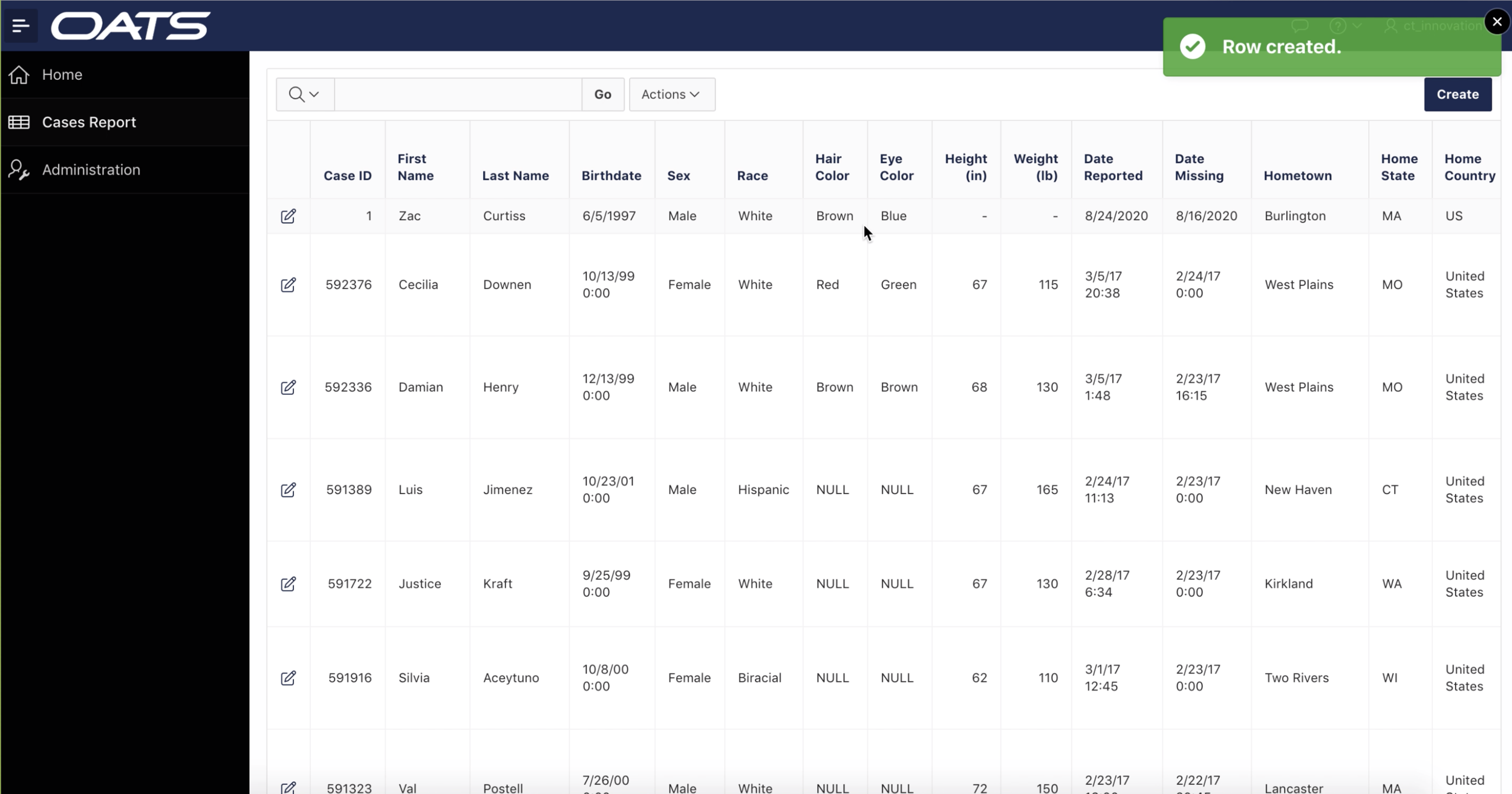
Data shown in the application is used for demonstration purposes only.
The proposed solution enabled investigators to create and manage individual case profiles, providing a structured environment for organizing evidence, notes, and related information. Users could upload and manage large datasets while leveraging Oracle Autonomous Data Warehouse to support secure storage, scalability, and data accessibility.
By centralizing information within a single platform, investigators could more easily organize case data, reduce reliance on fragmented storage methods, and establish a foundation for future analytics and reporting capabilities.
Organizational changes
There was a massive re org that happened to the North American Cloud Engineering team in July and it completely stifled our momentum. Me and my development team got spread out across different organizations at Oracle in new roles. The project was moved into the development and innovation team in London, Uk.
What I learned:
Approaching our project from a design thinking perspective allowed us to define the problem, eliminate assumptions, enhance ideation and improve our prototyping and testing process.
Collaboration among the different teams in the project including sales, engineering, and management allowed for a diverse and successful pivoting process.
Through research, I was able to discover other issues that require in-depth research and work, Welfare was a new project developed from OATS.